The reason your laundry costs keep rising
When costs go up, our immediate assumption is always the same: prices must be higher. And while this may be the case, it's not the only explanation — especially when it comes to laundry.
But if it’s not price, what else could it be?
What should you be checking when your laundry bill starts to rise?
Cost per occupied room
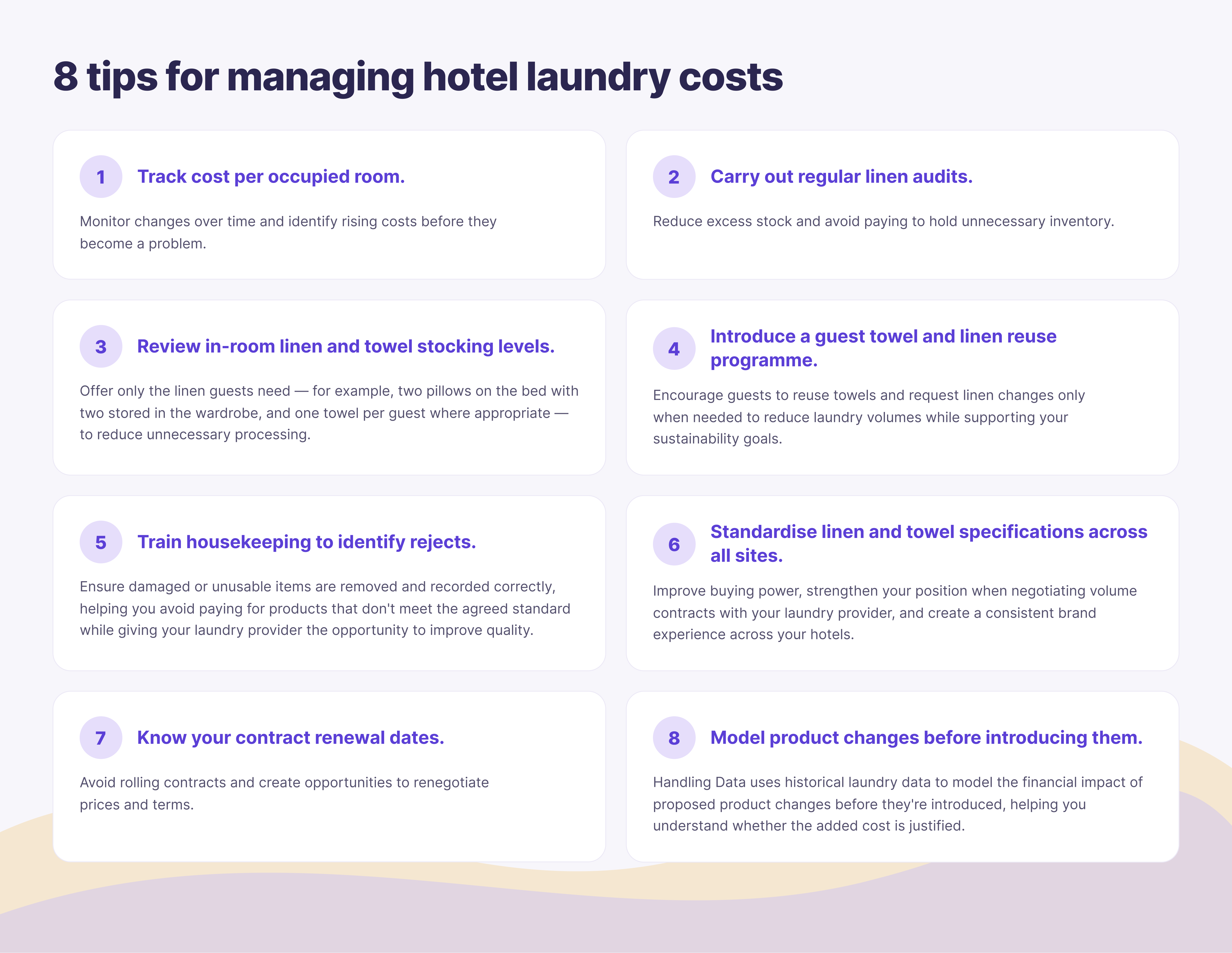
Laundry typically represents 2% to 4% of a hotel’s operating expenses and is often split across rooms, catering and leisure. But instead of reviewing the total invoice in isolation, measure each area against the activity it supports — for example, cost per occupied room, cost per catering cover or cost per leisure visit.
These metrics should remain relatively stable, even when you're busier and processing more laundry than usual.
One vs. multi-night stays
A higher proportion of one-night stays means more frequent room turnarounds and, as a result, more linen changes. You could therefore have the same number of occupied room nights but higher laundry requirements.
Rather than treating a higher laundry cost as poor performance, first consider whether your KPI still reflects current operating conditions. If shorter stays have become the norm, increasing your target by 50p may be more realistic.
.png)
Stock changes
Have your bathrobes been upgraded? Have larger towels been introduced? Have additional napkins or table linen been added to your catering operation? All seemingly small changes, but they can have a significant impact over time.
For example, say you replace every pillow in your 100-room hotel. Assuming each pillowcase costs an extra 24p to launder and the hotel operates at 90% occupancy throughout the year, that could lead to an additional £15,768 in costs each year — an increase that has nothing to do with external price rises, but with internal decisions made without fully considering their long-term impact.
Reject rates
Most hotels should expect around 3% to 4% of laundry items to be rejected. Yet many record 0%, suggesting damaged or poor-quality items are being returned to the wash.
Knowing the service levels agreed within your laundry contract, and having a defined method for identifying and recording items that don't meet them, ensures you're not paying for products that aren’t usable.
[[cta|See how Amaze Hotels saved £257k on laundry|/case-studies/profitable-growth-for-amaze-hotels-group]]
Delivery counts
Checking quality is important, but so is checking quantity. If a delivery note says you've received 100 items, but only 95 have arrived, it's much harder to resolve the issue if no one was available to verify the count at the time of delivery.
Having a clear sign-off process helps prevent disputes and ensures you only pay for the stock you’ve actually received.
But say you’ve ruled out delivery discrepancies — as well as changes in stay patterns and stock.
When is it time to look at price?
If you've noticed your laundry costs rising, it may be because your contract allows for annual price increases linked to an agreed cost index, such as the Textile Services Cost Index. Before accepting an increase, check that it's permitted under your contract, uses the correct index, and hasn't exceeded the agreed percentage.
If price increases are built into your contract, the best time to negotiate is at renewal. It's also an opportunity to reassess service levels, delivery schedules, quality standards, and whether your current arrangements still meet the needs of your business.
If you would like advice on an upcoming contract renewal, or want to better understand what's driving your laundry costs, get in touch with our team to arrange a call.
.svg)
.png)
.png)







.png)